
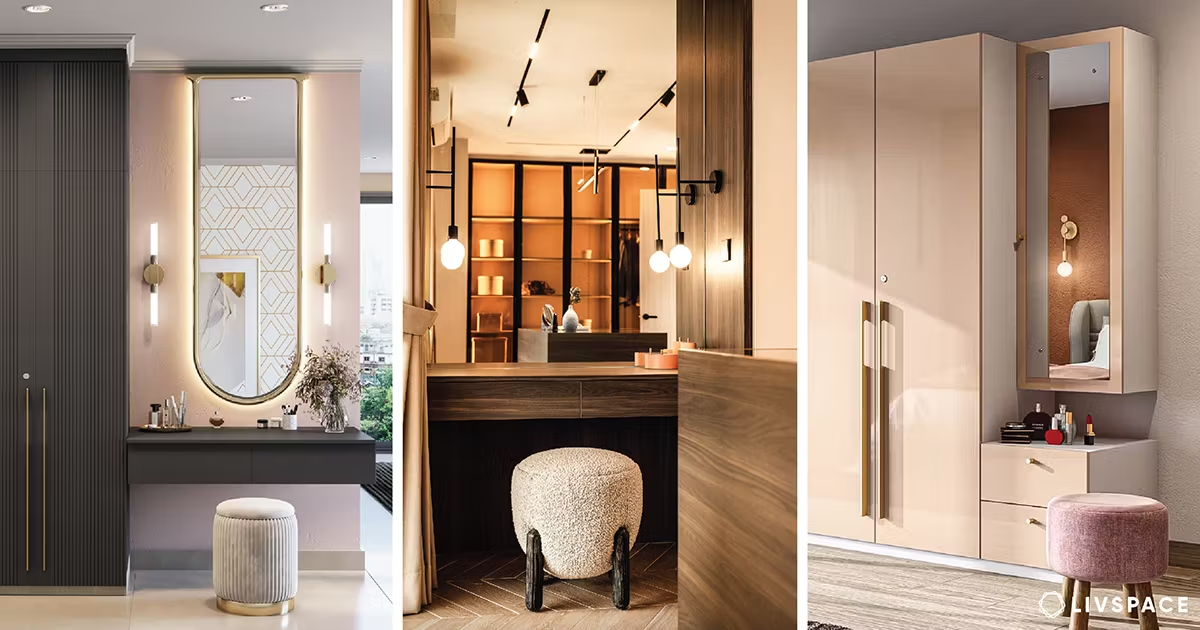
Dressing tables have evolved from simple grooming stations into multifunctional focal points that combine storage, style and everyday convenience in the bedroom or dressing room. Choosing the right one means balancing design, size, storage, mirror type and organisation so the piece actually improves your daily routine instead of adding clutter.
What is a dressing table?
A dressing table (often called a vanity) is a low table or console paired with a mirror and seating, designed as a dedicated place to get ready, do makeup, style hair and store personal grooming items. Modern versions can include drawers, cabinets, built‑in lighting and even integrated mirrors with smart features.
At its best, a dressing table acts as a personal hub where skincare, makeup, accessories and jewellery are all within reach, making mornings smoother and evenings more relaxed. Because it adds both function and visual focus, it can significantly influence the overall style of a bedroom.
Main types and styles
Dressing tables now come in a wide range of styles, from traditional carved wood to ultra‑minimal wall‑mounted units. Popular style families include modern, Scandinavian, vintage/retro, mirrored, rustic, French provincial, mid‑century modern, industrial, shabby‑chic and contemporary designs.
- Modern and contemporary designs favour clean lines, simple hardware and glossy or glass finishes that blend into minimalist interiors.
- Scandinavian styles use light wood, soft tones and integrated storage to keep the look calm and airy.
- Vintage, French provincial and Art Deco‑inspired pieces feature curves, decorative detailing and characterful hardware suited to more romantic or eclectic rooms.
- Mirrored and glam vanities reflect light, visually enlarge the room and pair well with statement lighting.
When choosing a style, match the table to your existing bed, wardrobes and flooring so it looks intentional rather than an afterthought. Consistency in materials and colour (for example, repeating the same wood tone or metal finish) helps the space feel pulled together.
Size, layout and ergonomics
The first practical step is to measure the available space accurately, including width, depth and height, plus clearance for a stool and opening drawers. There should be enough room to sit comfortably and move around without bumping into the bed, wardrobe or side tables.
- In compact rooms, narrower or corner dressing tables, or wall‑mounted ledges with a mirror, save floor space while still providing a dedicated zone.
- Larger bedrooms can accommodate wider tables with multiple drawers, side cabinets or a tri‑fold mirror for better angles.
Ergonomics matter: the tabletop height should suit your preferred posture so you are not constantly bending or stretching while applying makeup. Aim for a seat height that lets your forearms rest comfortably on the surface, and check that mirrors sit at eye level when seated.
Storage: drawers, shelves and hidden solutions
Storage is what turns a pretty table into a genuinely functional dressing station. Before buying, list what you actually need to store: daily skincare, makeup, fragrances, hair tools, brushes, jewellery and small accessories.
Key storage options include:
- Drawers: Ideal for makeup, skincare, hair accessories and backups; look for smooth mechanisms and full‑extension runners so nothing gets lost at the back.
- Shelves and cubbies: Good for perfumes and decor, but can quickly look cluttered if not styled intentionally.
- Hidden compartments: Shelves behind mirrors or side panels are useful for keeping valuables and less‑pretty items out of sight.
If you use bulky hair tools or large bottles, prioritise deeper drawers or a side cabinet that can swallow their height. For small items like lipsticks and jewellery, internal organisers (trays, dividers, acrylic boxes) are essential to prevent everything merging into one messy drawer.
Mirrors and lighting
The mirror is the visual centre of any dressing table, and its shape, size and position affect both function and style. Options range from single fixed mirrors to tri‑fold designs that allow you to see your profile from multiple angles.
- Larger mirrors help bounce natural light around the room and make small spaces feel bigger.
- Round or oval mirrors soften a boxy room, while rectangular or arch shapes feel more architectural.
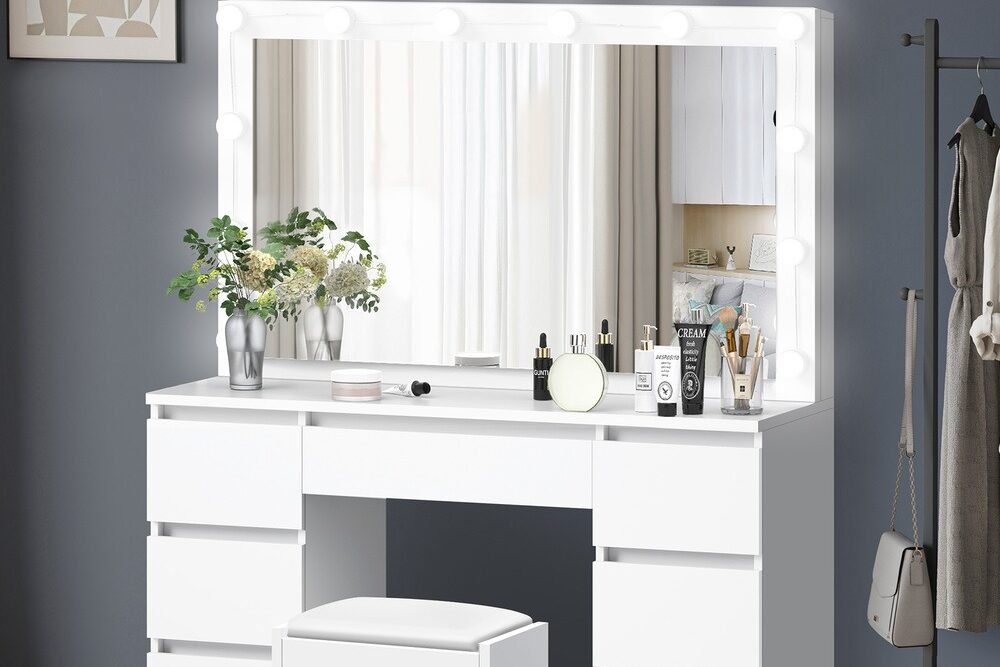
Lighting is equally important: bright, even light shows true colours and prevents harsh shadows across the face. Integrated LED mirrors, Hollywood‑style bulb frames or carefully placed wall sconces at eye height on either side of the mirror offer more flattering illumination than a single overhead ceiling light.
Materials, durability and maintenance
Common materials for dressing tables include solid wood, engineered wood, metal, glass and mirrored panels. Solid and high‑quality engineered woods tend to be more durable and repairable, while high‑gloss or mirrored finishes offer a glamorous look but show fingerprints more easily.
- Traditional wooden tables in finishes like walnut, teak or oak bring warmth and suit classic interiors.
- Metal and glass combinations look modern but require regular cleaning to stay streak‑free.
Check build quality details such as stable legs, sturdy fixings, smooth drawer slides and securely mounted mirrors for safety. Easy‑to‑clean surfaces matter because makeup, skincare and hair products can stain; sealed or laminated tops are more forgiving than raw, unfinished wood.
How to style the surface
A well‑styled dressing table balances beauty and practicality by keeping essentials accessible without overwhelming the surface. Designers often talk about creating “levels” using a mix of low, medium and tall items to avoid a flat, cluttered look.
Practical styling tips include:
- Use trays or shallow dishes to collect everyday items like perfume, lip balm and jewellery, so they look intentional rather than scattered.
- Add a taller piece such as a vase, candlestick or decorative lamp to introduce height and draw the eye upward.
- Incorporate one or two personal touches, framed photos, a small plant or a candle, to make the space feel like your own without sacrificing the work area.
Symmetry with matching items on both sides of the mirror can create a calm, hotel‑like effect, while asymmetrical clusters (often in odd numbers) give a more relaxed, editorial feel. The goal is to keep the central zone free enough for you to work comfortably.
Organisation habits for a clutter‑free vanity
Even the best dressing table will look messy without a system and a few simple habits. Start by decluttering old, expired or unused products, then group what remains into categories such as daily essentials, occasional items and backups.
- Reserve prime, easy‑reach space (top surface and top drawers) for everyday items, splitting them into morning and evening routines if that helps.
- Move occasional or seasonal products to lower drawers, higher shelves or a separate storage box.
- Divide drawers into “zones” using organisers so skincare, makeup, hair tools and jewellery each have a dedicated section.
Vertical solutions like rotating organisers, tiered trays or stackable acrylic units are ideal for small surfaces, especially in bathrooms or compact bedrooms. A quick daily reset, wiping the surface and returning items to their zones, keeps the table photo‑ready with minimal effort.
Budget, value and where to buy
Dressing tables are available at almost every price point, from budget flat‑pack units to designer pieces. At lower budgets, expect simpler materials and finishes, but still pay attention to dimensions, mirror size and basic storage to avoid a false economy.
Mid‑range collections from major furniture retailers often offer the best balance of design, durability and functionality, with coordinated bedroom ranges so you can match other pieces. Higher‑end or custom options justify their price with superior joinery, thicker materials, unique design details and long‑term sturdiness.
Online shopping makes it easy to compare dimensions, internal layouts, and customer photos, but always cross‑check measurements and read the specifications for materials, weight capacity, and assembly requirements. In‑store visits are still valuable for judging real‑world colour, finish and comfort when seated.
Final checklist before you buy
Before committing to a dressing table, run through a quick checklist:
- Does it fit your space with comfortable clearance for seating and drawers?
- Does the style match or complement your existing bedroom furniture and overall aesthetic?
- Is there enough storage, with the right mix of drawers and compartments for your routines?
- Are the mirror’s size, shape, and position suitable, and can you add or adjust the lighting if needed?
- Are the materials durable and easy to maintain for your lifestyle?
When those boxes are ticked, a dressing table stops being just another piece of furniture and becomes a daily ritual space that supports confidence, calm and a more organised life.